Social Sustainability is among the least known and addressed aspects of ESG (Environmental, Social, and Governance) efforts for companies and organizations. It involves recognizing and managing a business’s impact on people and communities, encompassing benefits and drawbacks. While the integration of these initiatives is designed to meet people’s needs, they ultimately have a positive impact on the organization’s performance and brand reputation.
Therefore, developing a culture of empowerment is becoming increasingly important to unlock human potential and optimize businesses and their assets. GET decided to meet this growing market demand by supporting the development of regenerative projects and sustainability strategies with a new innovative partnership with OrgTech. Thanks to this partnership, it is possible to enhance people’s potential by embracing an approach that prioritizes the human capacity of groups and individuals while designing future organizations.
Market needs
It is estimated that people in industrialized countries spend most of their time indoors; consequently, employees, customers, and other stakeholders expect workplaces that prioritize health and well-being. Addressing stakeholders’ new needs is essential to enhance social sustainability initiatives in business operations. This may imply reimagining the work environment by providing alternatives that harmonize social and environmental imperatives. Remote or hybrid working serves as an example and starts a “debate around health”. This model offers employees more control over their time, improves work-life balance, and the opportunity to gain global talent. Regarding the environmental aspects, it creates several benefits by reducing traffic and office energy expenses. However, it brings to the attention some drawbacks such as the difficulty of defining clear divisions between work life and home, the risk of augmenting isolation, weakening team cohesion, and rising housing costs. Therefore, it is essential to maintain a broad perspective to select the most effective strategies in a market where social sustainability is becoming an increasingly key factor in corporate decisions.
Furthermore, prioritizing people in business strategies is an investment that fosters employer branding: a series of initiatives aimed at strengthening the company’s reputation as an ideal workplace. This attracts and retains top talent and improves corporate positioning. According to an International WELL Building Institute study, the Return on Investment (ROI) of healthy buildings can be verified through measurable indexes, which show the following results:
- Higher rent premiums and more favorable lease terms;
- Reduced healthcare spending, absenteeism, presenteeism, and employee turnover;
- Improvement of overall ESG performance.
Navigating this complex scenario and finding the optimal organization’s balance requires engaging professionals capable of tailoring strategies to harmonize company and people’s needs with evolving European and International Regulations.
Empowerment for all: a focus on Diversity, Equity and Inclusion
According to an article by the Boston Consulting Group, there is a strong correlation between the diversity of management teams and overall innovation: “Companies that reported above-average diversity on their management teams also reported innovation revenue that was 19 percentage points higher than that of companies with below-average leadership diversity—45% of total revenue versus just 26%”. Social sustainability best practices foster physiological and social needs balance. This goal can be pursued by complying with international standards provided by specific certifications such as the WELL Equity Rating. This standard addresses the creation of a building environment where everyone can feel welcome, seen, and heard. It is a journey where inclusive design, health benefits and services, supportive programs and spaces, and community engagement go together to create healthier organizations.
GET & OrgTech for a culture of empowerment
OrgTech believes in the idea that each individual holds values, creative potential, and transformative energy. They are committed to optimizing human potential by a participatory and co-designing approach. GET shares this vision with a focus on the physical spaces of organizations to integrate environmental and social sustainability best practices. Thanks to these common principles, we have combined the specializations to provide an empowerment journey that can meet each Client’s specific needs.
The project starts, highly tailored to each organization’s needs, and consists in analyzing organizational processes, developing optimal HR initiatives, and optimizing workplaces to support people and teams. The process is divided into three phases:
- Discovery: listening to HR and management departments to identify risks and opportunities. Alongside this, an analysis of workspaces and how they are used is performed.
- Design: creating effective solutions by reviewing policies and procedures, enhancing and redesigning spaces -physical and digital- following internationally recognized standards, and aligning them to the Client’s needs.
- Dissemination: co-design of a change management plan guided by the most modern techniques from academic studies and market innovations.
There are international standards for adopting a culture of empowerment as a key factor for success, such as WELL Equity Rating.
WELL Equity Rating for the Future Organization
WELL Equity Rating is a roadmap that enhances people’s value and puts DEI -diversity, equity, and inclusion- goals first. It turns commitment into action by prioritizing individual uniqueness and creating environments where everyone can thrive. The protocol is based on an internationally, constantly evolving and recognized framework developed by listening and observing what actually works best in addressing the needs of specific groups. Furthermore, it takes a holistic approach to management policies, welfare, and the physical spaces of organizations. It is a certification widespread throughout the world: 74,000+ locations participate in WELL across 5.37 billion m2 in 137 countries.
The compliance of WELL allows to:
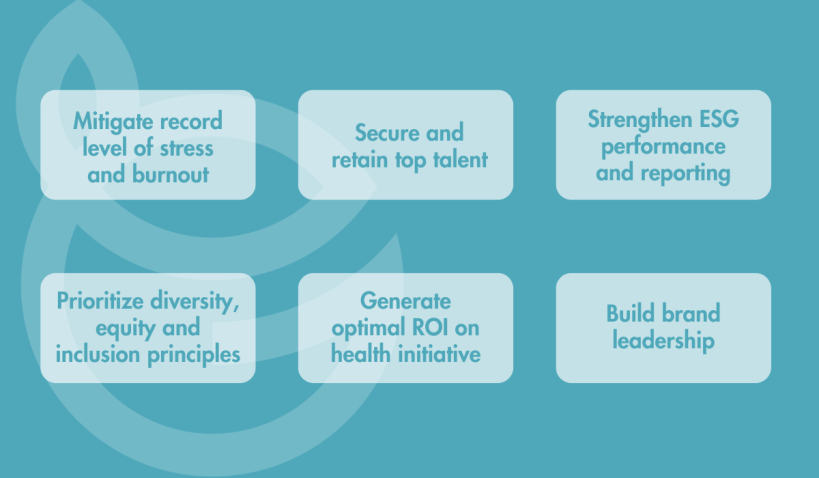
Employees and Clients are shifting their focus toward companies that prioritize DEI principles and social sustainability practices. To build future organizations is essential to define these values as a priority in business growth strategies.
Shaping Organization, Empowering People
OrgTech and GET provide organizations with strategic guidance to enhance sustainability practices -ESG and DEI-, emphasizing the importance of human capital as the main corporate asset.
Daniele Guglielmino -GET CEO- stated: “We start with a punctual analysis of the company’s existing processes and policies to support the deployment of innovative ESG and DEI solutions. The partnership addresses stakeholders that have a transformative mindset and want to achieve long-term results. As a result of the investigation phase, GET focuses on building optimization to be developed in harmony with OrgTech’s work on company policies.”
Luca Solari – OrgTech Founder vision is “Our ambition is to place the human being at the heart of every business and institution, shaping environments where people truly thrive. Well-being in organizations is not just about the workplace, the building, HR policies, or even purpose alone—it is the synergy of all these elements, creating a culture that fosters growth, engagement, and fulfillment.”
We transform ESG principles into concrete actions, ensuring that the ‘E’ -Environmental- and ‘S’ -Social- work in synergy to develop sustainability strategies integrated into the “G” for “Governance”, with a focus on DEI Values. We are willing to help build future organizations that integrate culture, corporate policies, and work environments to create meaningful experiences that foster individual and collective growth.
Contact us for more information.